

Sofia, living with hATTR amyloidosis
hATTR Amyloidosis At-A-Glance

Affects ~50,000 people worldwide, though many people remain undiagnosed or misdiagnosed.

Is an autosomal dominant disease, meaning it can be inherited from one parent.

Caused by one of 120+ TTR gene variants, some more common in those of Portuguese, Swedish, Japanese, African and Irish descent.
hATTR Amyloidosis Inside The Body
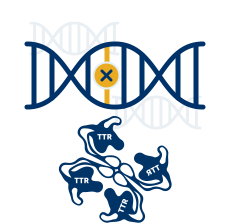
hATTR amyloidosis is an inherited, progressive disease caused by a
variant in the TTR gene.
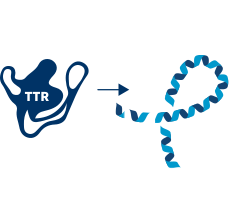
This variant causes the TTR protein—which is made primarily in the liver and carries vitamin A—to misfold.

The misfolded TTR protein collects as amyloid deposits throughout the body, including the nerves, heart and digestive system.
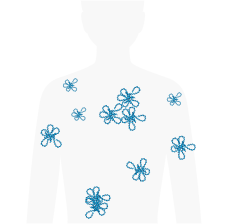
These amyloid deposits accumulate over time and cause symptoms of the disease.
What Are The Symptoms of hATTR Amyloidosis?
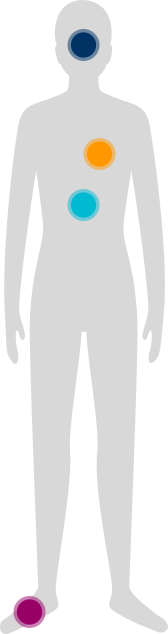
There are many different symptoms of hATTR amyloidosis, and they can affect several parts of the body, including the nerves, heart and digestive system.
Nerve damage that affects sensation, movement, strength, the digestive system and other bodily functions may be referred to as polyneuropathy.
This is not a complete list of symptoms that may be experienced in patients with hATTR amyloidosis. Each patient has a different experience and may not experience all of these symptoms, or may not experience them at the same time. Symptoms of hATTR amyloidosis may worsen over time. Talk to your doctor if you think you are experiencing symptoms of hATTR amyloidosis.



ATTR Perspectives

Life's like a roller coaster. It's ups and downs, but I'm not ready to get off the ride yet.
– Marc, living with ATTR-CM
Additional Information

ATTR Revealed™
ATTR is a progressive disease, which means it can worsen over time. Early diagnosis is crucial.

Alnylam Act®
Alnylam Act® provides no-charge, independent genetic testing and counseling to individuals in the US and Canada who may have hATTR amyloidosis.
ATTR Revealed, Alnylam Act, and their associated logos are trademarks of Alnylam Pharmaceuticals, Inc. © 2026 Alnylam Pharmaceuticals, Inc. All rights reserved.


You will be redirected to an external site that may include social media, event registration, or other third-party content related to Alnylam.
Please note that these external sites have their own terms of service and privacy policies, which may differ from those of Alnylam.
Proceed to Site